Door stuck open
We focus on getting the door secured or closed safely so your garage and home are not left exposed, then address the part that caused the failure.
Serving Pace, Florida & surrounding areas
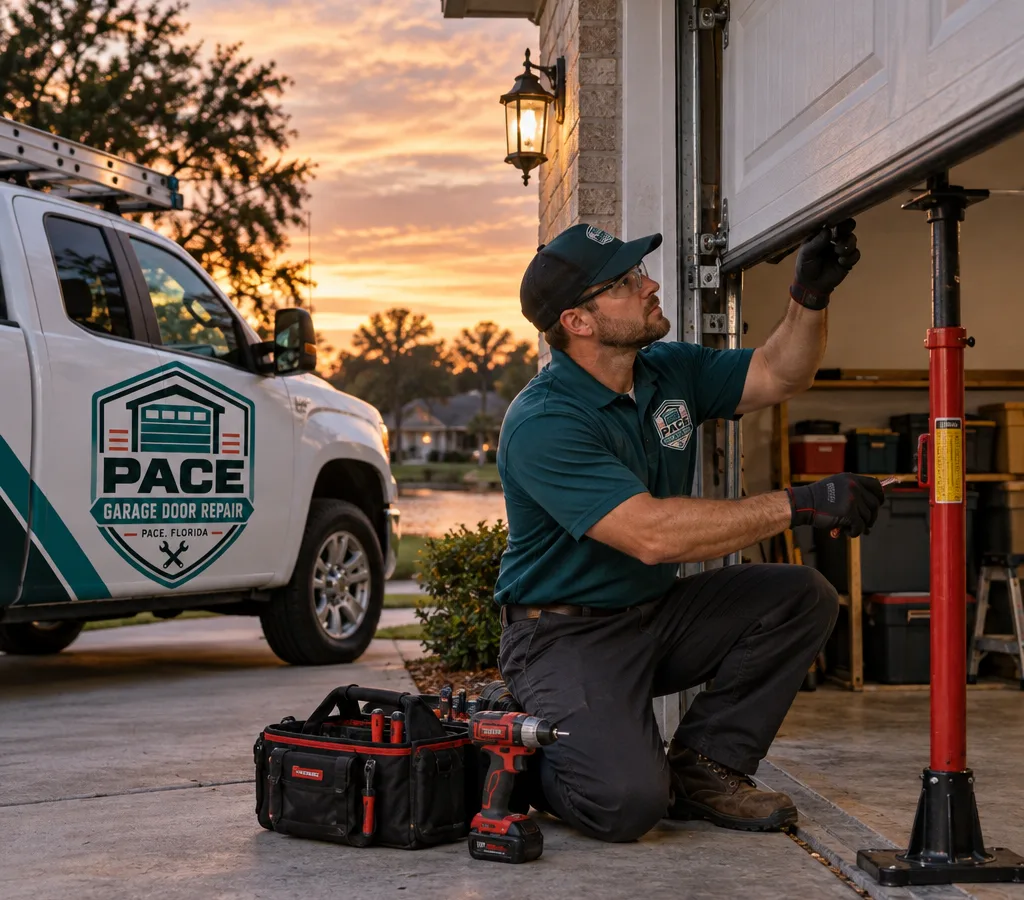
Emergency repair in Pace, Florida
When the door won't open, won't close, or looks unsafe to use, we help you get secure access back with a clear plan and the right fix.
Urgent garage door help
When a door is stuck open, stuck closed, hanging crooked, or refusing to move, the priority is simple: make the door safe, restore access, and prevent the problem from getting worse.
We handle urgent problems including doors that will not close at night, openers that only hum or click, and doors that jump the track. We start by controlling the door safely, especially if it is heavy, off-balance, or partially supported, then diagnose the failure point and explain what needs to happen next.
Some emergencies are obvious. A loud bang from the garage and a door that suddenly feels “dead weight” is often a broken spring. A door that moves a few inches and stops can point to a damaged cable, a jammed roller, or an opener safety issue. If the door is crooked in the opening or you can see a roller outside the track, it should not be forced.
If you also want a broader overview beyond emergencies, you can compare typical garage door fixes and maintenance options.
We focus on getting the door secured or closed safely so your garage and home are not left exposed, then address the part that caused the failure.
We check for spring or cable failures, track binding, and opener issues, then restore safe lift and travel without forcing the door.
We stop further damage by stabilizing the panel and hardware, then reset rollers and track alignment and confirm smooth travel.
We inspect the trolley, chain or belt, rail, and the door's balance. Many opener problems are caused by a door that has become too heavy or jammed.
Those sounds usually mean a mechanical bind, worn rollers, loose hardware, or a spring or cable problem. We locate the source and correct the cause, not just the symptom.
If a vehicle bump or storm debris bent a track or panel, we assess whether it is safe to operate and what it takes to get it opening and closing correctly again.
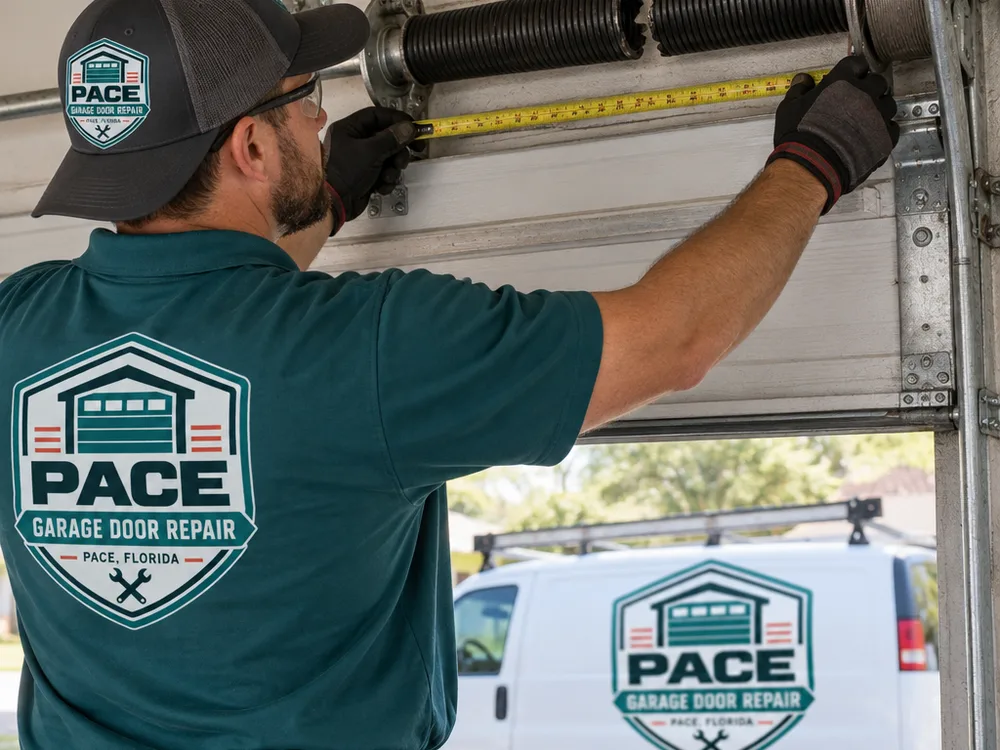
Emergency calls often come down to a few common failures. The exact fix depends on what failed, how the door is built, and whether any secondary damage happened when it stopped.
Broken torsion or extension springs are a leading cause of a door that won't lift. Springs store energy to counterbalance the door's weight. When one breaks, the opener may strain or refuse to lift at all, and manual lifting can be dangerous.
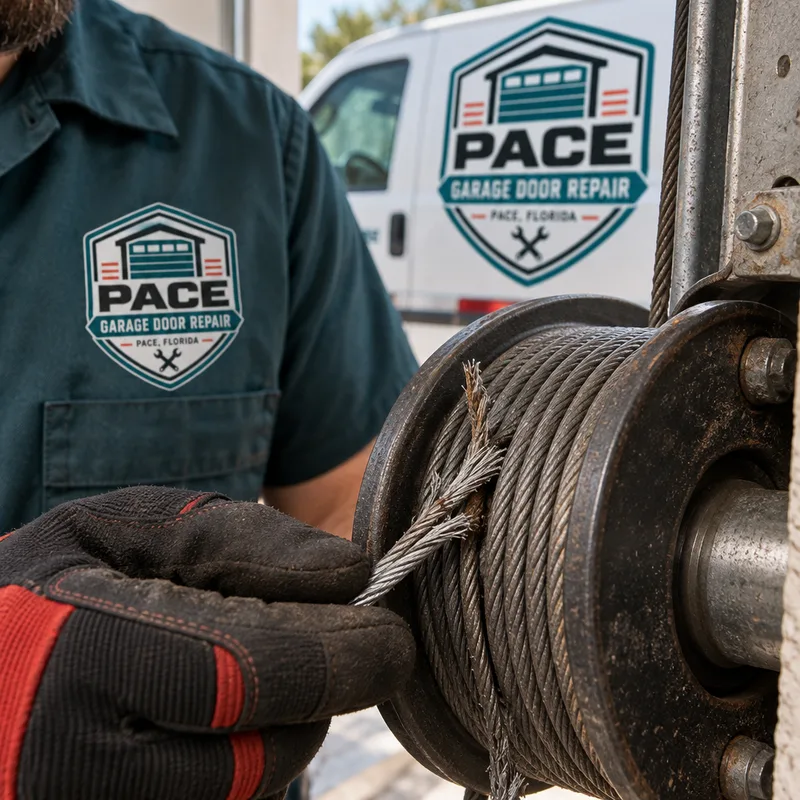
Frayed or broken lift cables can make the door rise unevenly or hang at an angle. If a cable comes off a drum or snaps, the door can bind and rack in the opening.
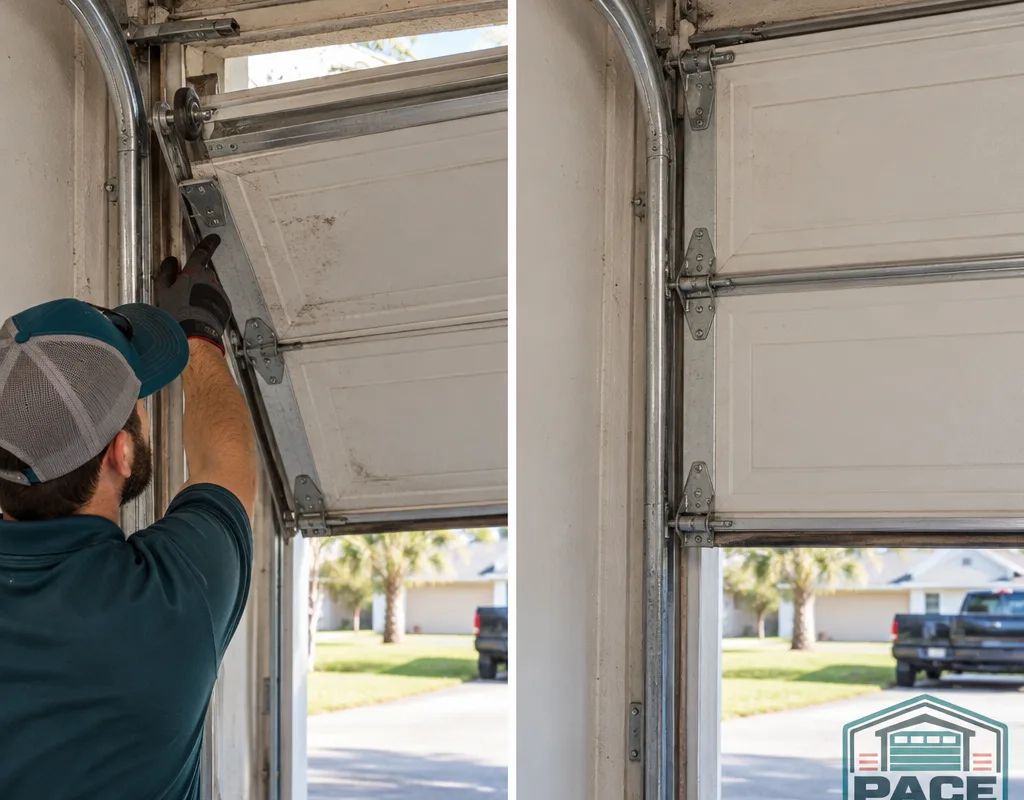
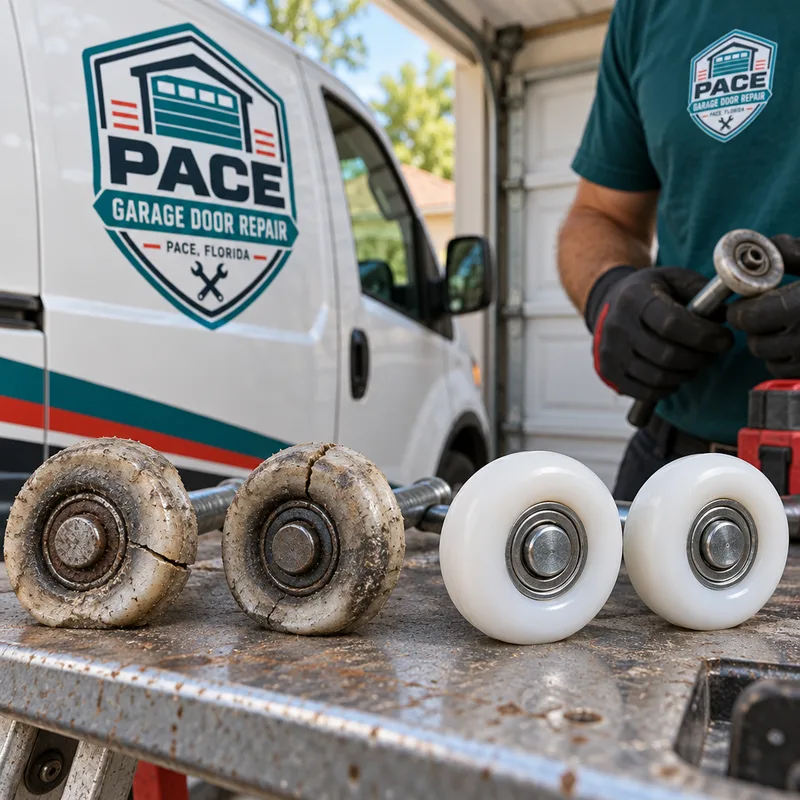
Rollers and tracks cause problems when they are worn, bent, or misaligned. An off-track roller can make the door look “derailed,” and continuing to run the opener can bend track or damage hinges.
Opener and safety system issues can stop the door even when the door hardware is fine. Photo-eyes knocked out of alignment, a damaged travel module, or a stripped gear can leave you with a door that moves inconsistently.
Whatever the failure, the safest move is to stop operating the door until it is stabilized and the cause is confirmed. Forcing it often turns a single broken part into multiple damaged parts.
Your emergency visit
We look at the door position, track alignment, cable tension, and spring condition first. If the door is hanging, crooked, or partially supported, we stabilize it before any testing.
We inspect the full lift system: springs, drums, cables, rollers, hinges, track, and the opener interface. The goal is to identify the root failure and any collateral damage.
You get a straightforward scope: what failed, what has to be repaired to make it safe, and what additional worn parts, if any, should be addressed while the system is apart.
After the repair, we verify door balance, travel, and smooth operation. If the opener is involved, we confirm it runs without straining and that safety features function correctly.
Before we wrap up, we point out what to watch for next: unusual noises, uneven travel, or slow response, so you can catch wear before it becomes another emergency.
While you wait
Do keep people, pets, and vehicles clear of a crooked or partially open door. A door that is off-track or has a broken spring can move unexpectedly.
Do disengage the opener only if you can do it safely and the door is fully closed. If the door is stuck partially open or feels heavy, leave it alone.
Don't keep pressing the wall button or remote when the door is binding. This can strip opener gears, burn out a motor, or bend track.
Don't attempt to wind springs or re-seat cables yourself. Garage door springs and lift cables are under significant tension, and the risk is not worth it.
Garages often double as storage and the primary entry for school drop-offs and work commutes. If your garage door is your main daily access point, an emergency repair is not just about convenience. It is about getting a secure opening again.
Repair details
Common questions
It is usually not safe to lift a garage door with a broken spring because the door can be far heavier than it feels when the spring is intact. If the door must be moved for safety, it should be stabilized and handled with control, not forced, because a sudden drop can damage the door and cause injury.
Treat a door stuck open as a security issue: keep the area clear, avoid running the opener repeatedly, and schedule emergency service to get the door secured and operating again. In many cases the immediate goal is safe closure or temporary securing first, then the underlying spring, cable, track, or opener problem is repaired.
If the opener runs but the door barely moves, stops, or reverses, the door itself may be binding or out of balance due to spring or cable issues. A simple clue is door weight: if the door feels unusually heavy when disengaged, only when fully closed and safe to test,the opener is often reacting to a mechanical problem, not causing it.
You should not push an off-track door back into place because the rollers, hinges, and track can be under load and the panel can twist. Off-track doors often need the system stabilized, rollers guided back properly, and track alignment checked so the door does not derail again on the next cycle.
Many emergency repairs are completed in one visit once the issue is diagnosed, especially for common problems like spring replacement, cable re-seating, or track and roller corrections. Time depends on whether there is secondary damage, such as bent track, cracked hinges, or a compromised panel that affects safe operation.
Yes, impact damage is a common emergency because it can leave the door jammed or unsafe to operate. An on-site assessment of the track alignment, panel integrity, hinge points, and opener rail connection determines whether it can be made operational safely and what parts must be replaced.
If your door is stuck, crooked, or making alarming noises, we can inspect the system, explain what failed, and complete the right repair.