Correct sizing and fit
We measure the opening and the available headroom and sideroom so the track layout and door height match the space you actually have.
Serving Pace, Florida & surrounding areas
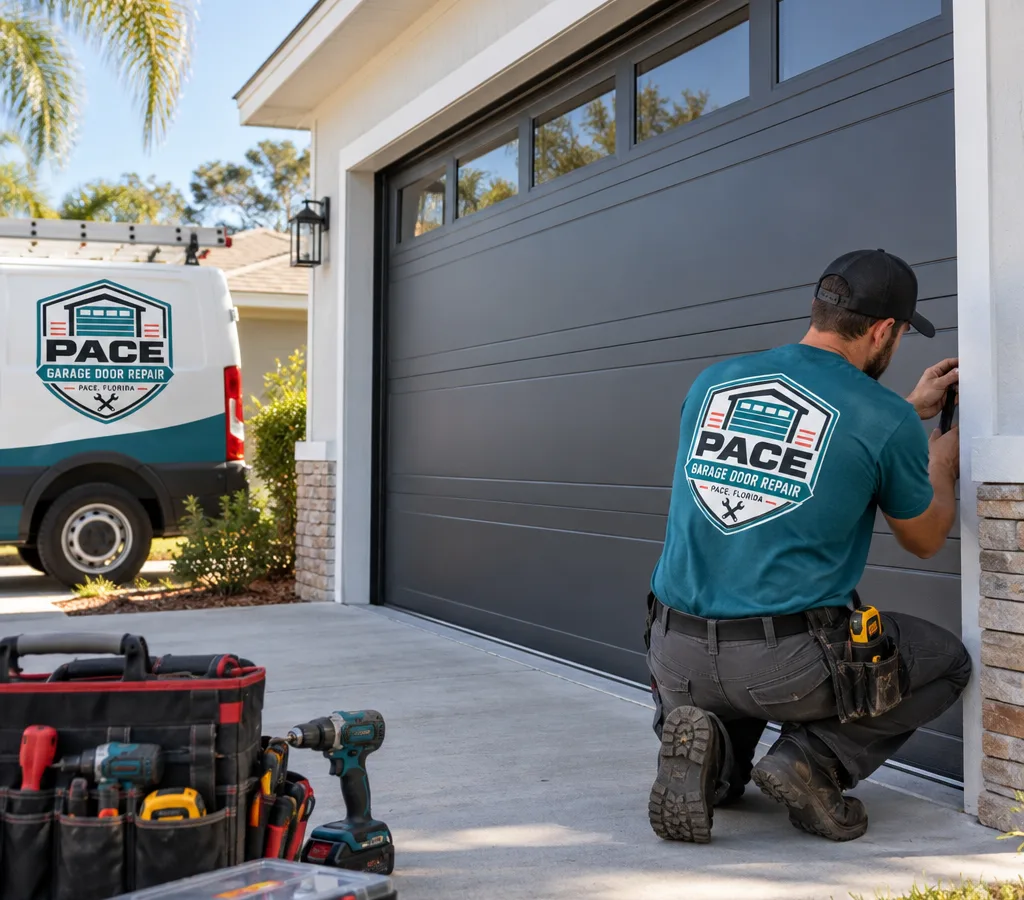
Garage door installation in Pace, Florida
Replace a bent, noisy, or drafty door with a properly sized and balanced new door that runs smooth, seals tight, and fits your home's wind conditions.
Choosing a new door
If you're shopping for a new garage door, the door itself is only half the job. The install is what decides whether it runs quietly, stays level, seals against wind-driven rain, and doesn't chew through rollers and hinges.
We install new residential garage doors with the basics done right: correct opening measurements, proper track spacing, solid mounting points, and a balanced spring system so the opener is not doing the heavy lifting. If your current door is dented, rusting, or letting light and air in around the edges, a replacement can also tighten up the garage and improve day-to-day use.
Because Pace sits in a hurricane-prone part of Florida, many homeowners ask about wind-rated doors. Wind rating is not a buzzword. It's a door built and reinforced to resist specific wind pressures. If you want that added protection, we can go over wind-rated steel options and what additional bracing or hardware may be needed for your opening.
Installation details
We measure the opening and the available headroom and sideroom so the track layout and door height match the space you actually have.
A door should lift and hold its position with minimal effort. We set spring tension so the door runs stable and the opener is not strained.
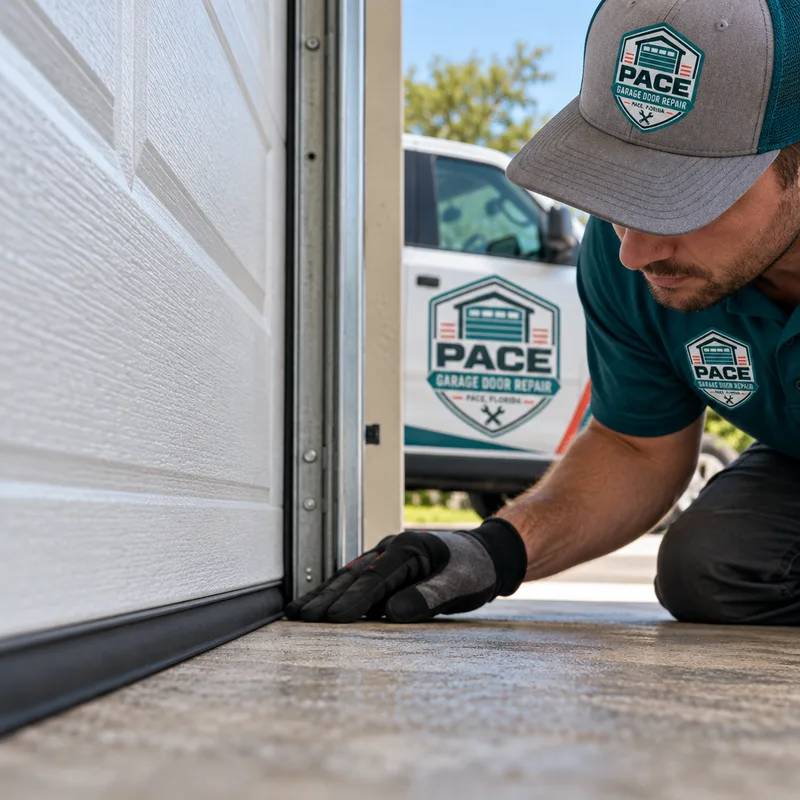
Bottom seal, perimeter trim, and correct door alignment work together. A new door should close evenly without daylight at the edges.
Heavier doors, insulated doors, and wind-rated doors may need upgraded hinges, rollers, and track. Mismatched hardware is a common cause of early wear.
If you are keeping your current opener, we verify it is sized for the door weight and that the limits and safety reversal are set correctly after installation.
Straight verticals, level horizontals, tight fasteners, and tidy cable routing are the difference between a door that looks good today and one that stays reliable.
Door construction and protection
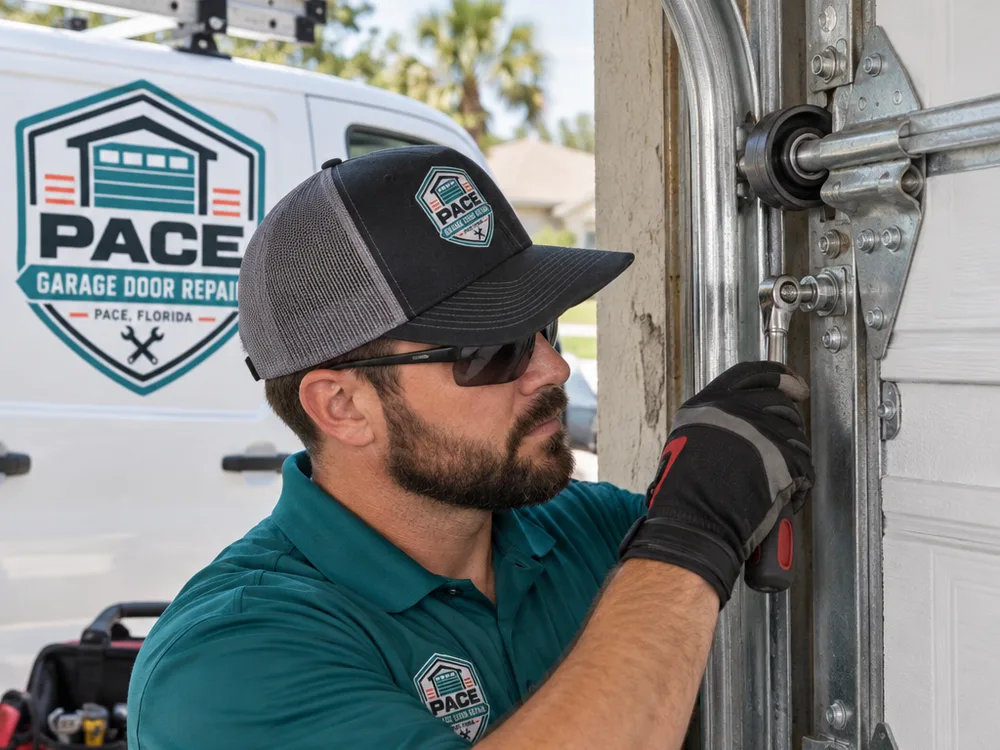
For many Pace garages, the best door is the one that matches how the space is used.
If the garage is mainly storage and you just want a durable exterior, a non-insulated steel door can be a practical choice. If you spend time in the garage, have living space nearby, or want a quieter door, an insulated door (often with a steel skin on both sides) can reduce rattle and help with temperature swings.
If your priority is storm readiness, a wind-rated model is worth considering. These doors use added reinforcement and are typically paired with heavier track and stronger attachment methods. The goal is to keep the door from buckling or pulling out of the opening under high wind pressure.
We will go over door material, insulation, windows (or no windows), color, and hardware. We also look at the opening structure so the installation plan matches the door you choose, especially for heavier or wind-rated builds.
Your installation visit
We verify width, height, headroom, and sideroom, then confirm the door size and any wind-rated or insulation requirements before parts are ordered or brought to the job.
We take down panels, tracks, springs, and hardware safely, then check jambs and mounting surfaces so the new track and spring system have solid support.
We set the verticals plumb, horizontals level, and align sections so the door travels without binding. Rollers, hinges, and brackets are matched to the door.
Cables are set evenly and springs are adjusted so the door lifts smoothly and stays put when partially open. This is key for safety and opener life.
We set limits and force, verify photo eyes and safety reversal, and run the door through multiple cycles. We also confirm the lock and manual release work properly.
We check the bottom seal contact, perimeter gaps, and exterior trim alignment, then show you basic operation and what to watch for as the door breaks in.
Installation quality
A garage door can look fine at a glance and still be set up in a way that causes problems a few months later. These are some of the issues we watch for during an installation:
Track that is not square or level: This leads to rubbing, noisy travel, and rollers that wear out early.
Springs sized or tensioned incorrectly: An unbalanced door makes the opener work harder and can cause jerky movement or a door that won't stay open.
Cable drums and lift cables not set evenly: This can make the door rise crooked and stress hinges and end bearings.
Lightweight hardware on a heavier door: Insulated and wind-rated doors often need upgraded hinges, rollers, and track to handle the weight and loads.
Poor sealing at the floor or jambs: Gaps let in water, insects, and wind-blown debris, which is a common frustration during Florida storm season.
If you are also dealing with a door that is stuck, off-track, or grinding right now, it often makes sense to address the immediate problem first. We handle both, and repair is the right call when the door itself is still in good shape.
Door styles and details
Common questions
Most standard garage door installations can be completed in a single visit, but the exact time depends on door size, whether the opener is being replaced, and whether the opening needs reinforcement for a heavier or wind-rated door. If the old door has unusual framing, damaged mounting surfaces, or nonstandard track layout, the job can take longer because the opening has to be set up correctly before the new hardware goes in.
You do not always need to replace the opener, but it must be compatible with the door's weight and travel. If you are moving to an insulated or wind-rated door, the added weight can justify upgrading the opener, and we also check that safety sensors and force settings can be adjusted correctly after the new door is installed.
Yes. Wind-rated doors are a common request in this part of Florida, and the installation often involves heavier track and reinforcement compared to a basic door. We will confirm the door specifications and evaluate the opening so the mounting points and hardware match the door's wind-rating requirements.
The right size is based on the actual framed opening, plus the available headroom and sideroom for tracks and springs. Even if your current door is labeled a certain size, it is best to measure because older installations can have nonstandard clearances or previous modifications that affect what will fit and operate correctly.
In most replacements, the old door sections and hardware are removed as part of the job, but the exact haul-away plan depends on the materials and site access. When you schedule, tell us what you have now (single door or double, wood or steel, and whether there is an opener) so we can confirm what will be taken away.
A properly installed door should be relatively quiet, but new noise usually comes from track alignment, roller type, hinge tightness, or a door that is not fully balanced. In Florida humidity, lubrication choice also matters. If a new installation is loud or jerky, it should be checked before the rollers and hinges wear in the wrong way.
Tell us what you want to change about your current door. We'll measure the opening, go over wind-rated and insulated options, and lay out the installation plan before work starts.