Safe door stabilization and reset
We secure the door so it cannot drop or twist, then guide rollers back into the track without forcing panels or hardware.
Serving Pace, Florida & surrounding areas
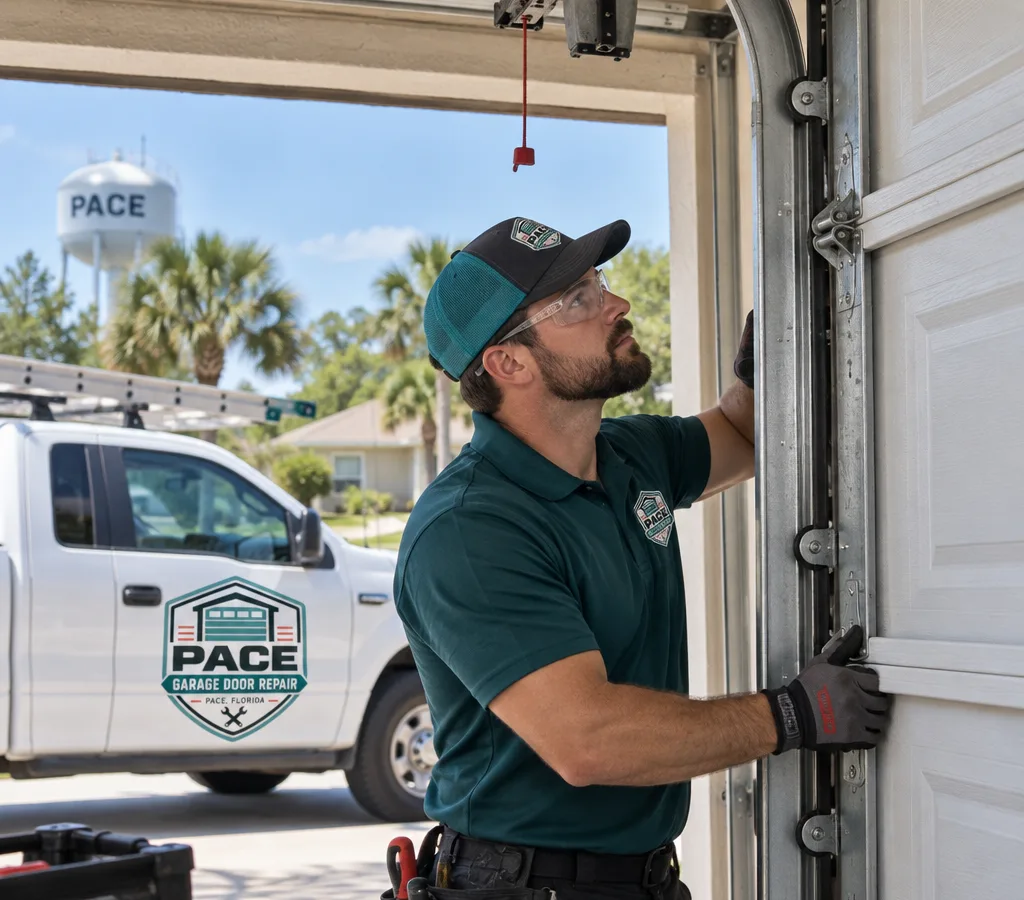
Off-track repair in Pace, Florida
If your door is stuck, leaning, or grinding in the tracks, stop using it. We reset the door safely, correct track and roller issues, and fix cable problems so it runs straight again.
Off-track door safety
A garage door that comes off track usually means the door is no longer supported evenly by both sides. One roller slips out, the door starts to rack, and the weight shifts into the remaining rollers, hinges, and cables. That is why an off-track door can suddenly bind, drop, or twist.
The goal is not just to push the rollers back in and hope for the best. The real fix is to find what caused the door to derail, correct the root problem, such as track alignment, damaged rollers, loose hardware, cable issues, or an obstruction, and then test the full travel by hand before reconnecting the opener.
If your door is crooked in the opening, has a gap at one side, or makes a harsh scraping sound, leave it in place and get it inspected. Forcing the opener can strip gears, bend the top section, or snap a cable.
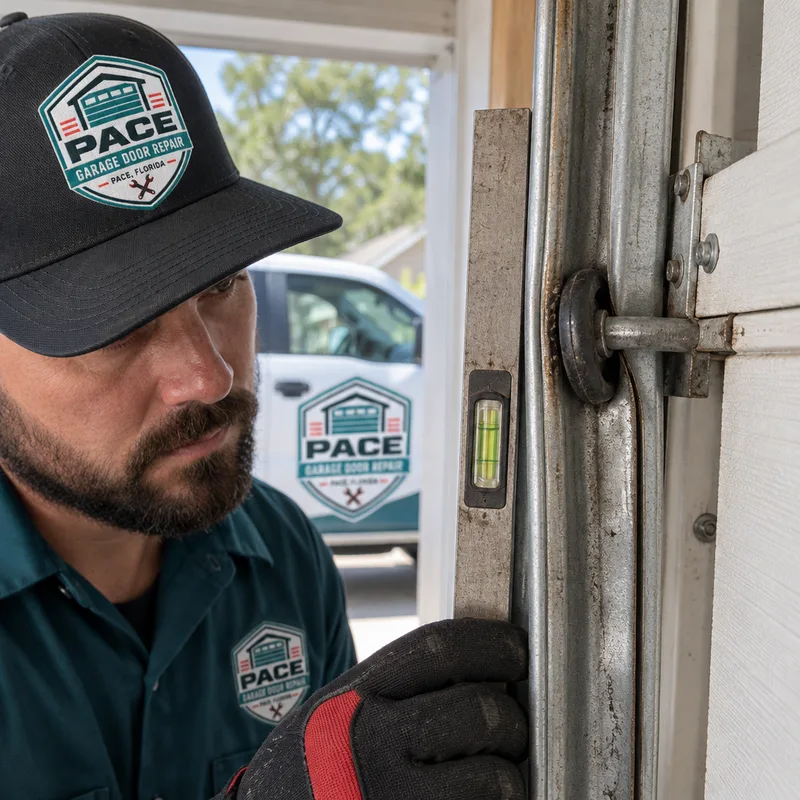
Most off-track calls start with one clear symptom: the door will not move, or it moves a few inches and jams. We begin by securing the door, disconnecting the opener, and checking the problem side for the most common causes.
Typical causes we see include:
We also look for secondary damage that can show up after the door derails, like bent hinges, cracked end bearing plates, or a bottom bracket that has shifted. These details matter because an off-track reset that ignores the underlying issue often fails again within days.
If you are also dealing with sticking, sagging, or noisy travel, general garage door repair may be the better starting point.
Complete off-track service
We secure the door so it cannot drop or twist, then guide rollers back into the track without forcing panels or hardware.
We re-square and re-align track sections, correct spacing, and tighten or replace mounting points when they have shifted.
We check for cracked nylon wheels, seized bearings, bent stems, and hinge damage that can push the roller out again.
We look for fraying, slack, uneven wrap on the drums, and side-to-side height differences that indicate a cable issue.
Before reconnecting the opener, we run the door by hand to confirm it stays in the tracks and moves smoothly through the full range.
Cable-related derailments
Cables are often part of the story when a door comes off track. On a typical sectional door with torsion springs, the lift cables attach at the bottom brackets and wind onto drums at the top. If a cable slips off the drum, frays, or loses tension on one side, the door can lift unevenly. That uneven lift is a common reason a roller pops out and the door ends up jammed.
Cable repair usually starts with verifying the door is supported and the spring system is not under uncontrolled load. Then we inspect the cable path, drums, end bearing plates, and bottom brackets for wear or shifting. Depending on what we find, the repair may involve rewinding the cable correctly on the drum, replacing frayed cables, addressing a bent track that caused the derailment, or correcting hardware that let the cable rub.
Cables and bottom brackets sit at the highest-tension points on the door. If the cable is visibly frayed, the drum wrap looks uneven, or the door is hanging at an angle, it is a good time to stop operation and schedule service.
Your repair visit
We check whether the door is hung up, tilted, or sitting with a roller fully out of the track, then secure the door before any adjustments.
We inspect track alignment, roller condition, hinges, and the cable-and-drum setup to find what made the door derail instead of treating the reset as the whole repair.
We correct alignment, address damaged components, reset rollers, and repair cable issues when the door is lifting unevenly.
We run the door manually for smooth travel and consistent spacing in the tracks, then reconnect the opener and verify normal operation.
Common questions
It is safest to leave an off-track door alone, because the door can shift suddenly and the cables and springs are under high tension. A partial derailment can look simple, but if the track is spread, a roller is seized, or a cable is off the drum, pushing the door can bend panels or cause the door to drop.
Stop using the opener and keep the door in its current position until it can be stabilized. If the door is stuck open, avoid walking under it and keep vehicles out of the opening, because an off-track door can move unexpectedly when the load shifts.
It can be any of the three, and often it is a combination. A bent or misaligned track can let a roller climb out, a worn roller can seize and derail, and a cable issue can lift one side first and rack the door until a roller pops.
Repairs take longer when there is cable damage, multiple bad rollers, or track sections that need more extensive correction. The timeline depends on how much secondary damage happened after the door derailed.
It can be. When a door binds, the opener may strain, the trolley can jerk, and internal gears can wear. After the door is put back on track, we recommend testing the door by hand first, then verifying the opener settings and travel so it is not forcing a misaligned door.
If you see slack on one side, fraying strands, uneven cable wrap on the drum, or the door is lifting unevenly and leaning, the cable system needs attention. Those symptoms are common when an off-track event is driven by uneven lift rather than track-only issues.
If your door is off track, stuck, or hanging crooked, we can inspect the track and cable system, explain what failed, and lay out the repair steps before the door goes back into regular use.