Belt-drive openers
A common choice when you want quieter operation. Ideal when a garage shares a wall with living space or bedrooms.
Serving Pace, Florida & surrounding areas
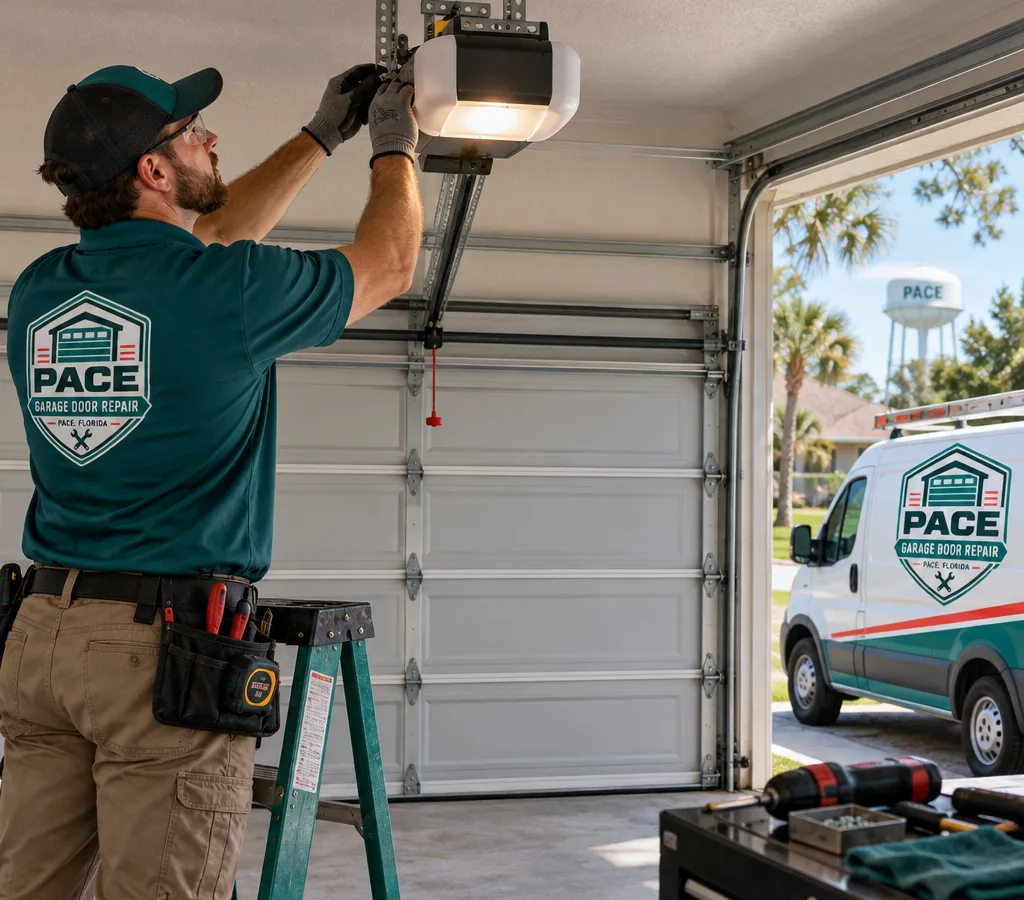
Opener installation in Pace, Florida
Get an opener that lifts smoothly, stops where it should, and reverses when it has to. We install and set up openers with proper mounting, wiring, travel limits, and safety sensor alignment.
Reliable daily operation
An opener job is usually one of two situations: a new opener going in, or an old unit being replaced because it is loud, unreliable, or no longer safe. Either way, the goal is the same. The opener should lift without shaking the door, stop gently at the floor and header, and reverse quickly if something is in the way.
The focus is correct setup, not just hanging a motor and handing over remotes. We check door condition first (because an opener cannot compensate for a door that binds), then mount the opener, set travel and force, align photo eyes, and confirm the manual release works as intended. If we find an issue that affects installation or safety, we'll explain what it is and what needs to be addressed before the opener goes into daily service.
If you're also dealing with a sticking, sagging, or noisy door, fixing that first is worth considering. An opener install goes better when the door is balanced and moving freely.
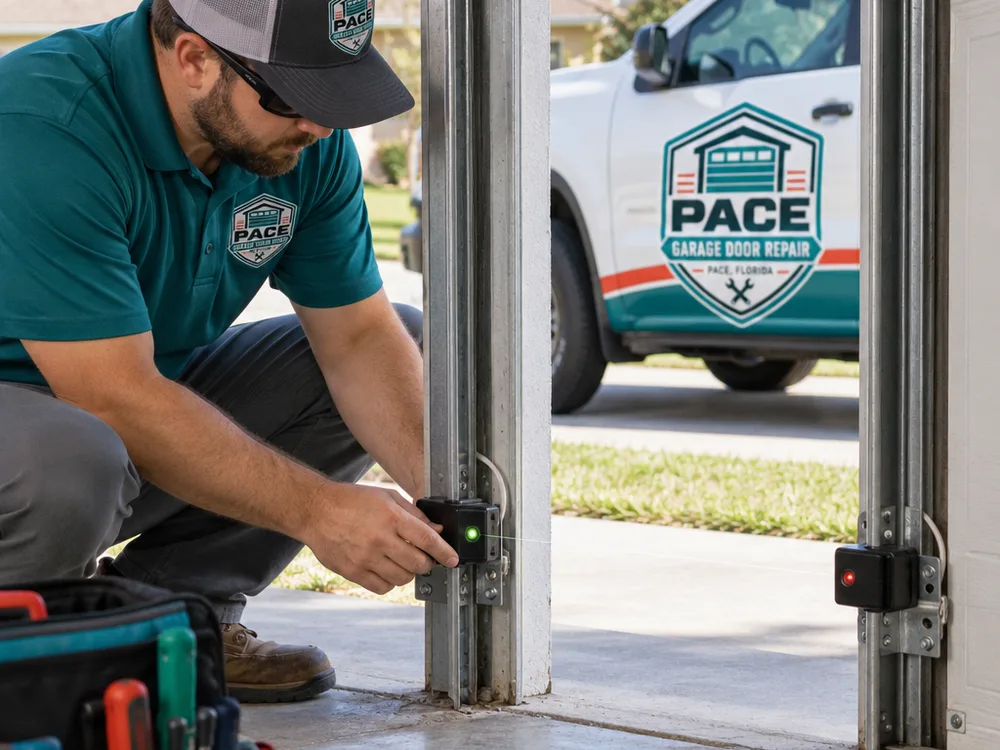
A proper installation is a set of small adjustments that add up to a door you can trust.
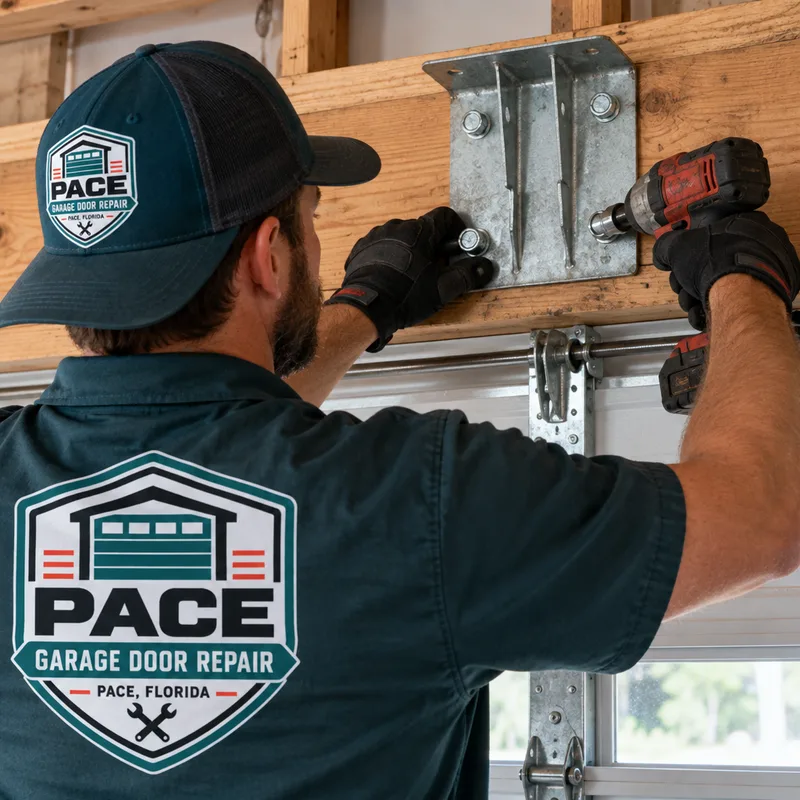
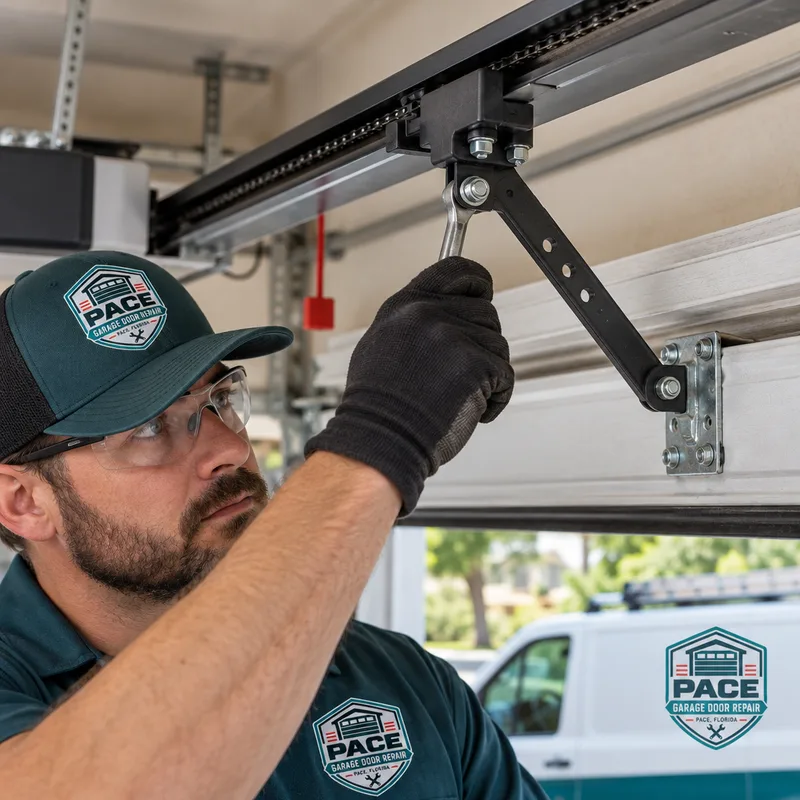
Mounting and rail alignment: The opener rail is centered and supported so it does not twist under load. The header bracket and door arm connection are set so the door travels without rubbing or jerking.
Electrical and controls: We connect wall controls and any required safety wiring, then verify the control station and remotes operate reliably from typical driveway distance.
Travel limits and closing force: Limits are set so the door seals to the floor without pushing hard enough to damage panels or strain the motor. Force settings are verified with functional tests, not guesswork.
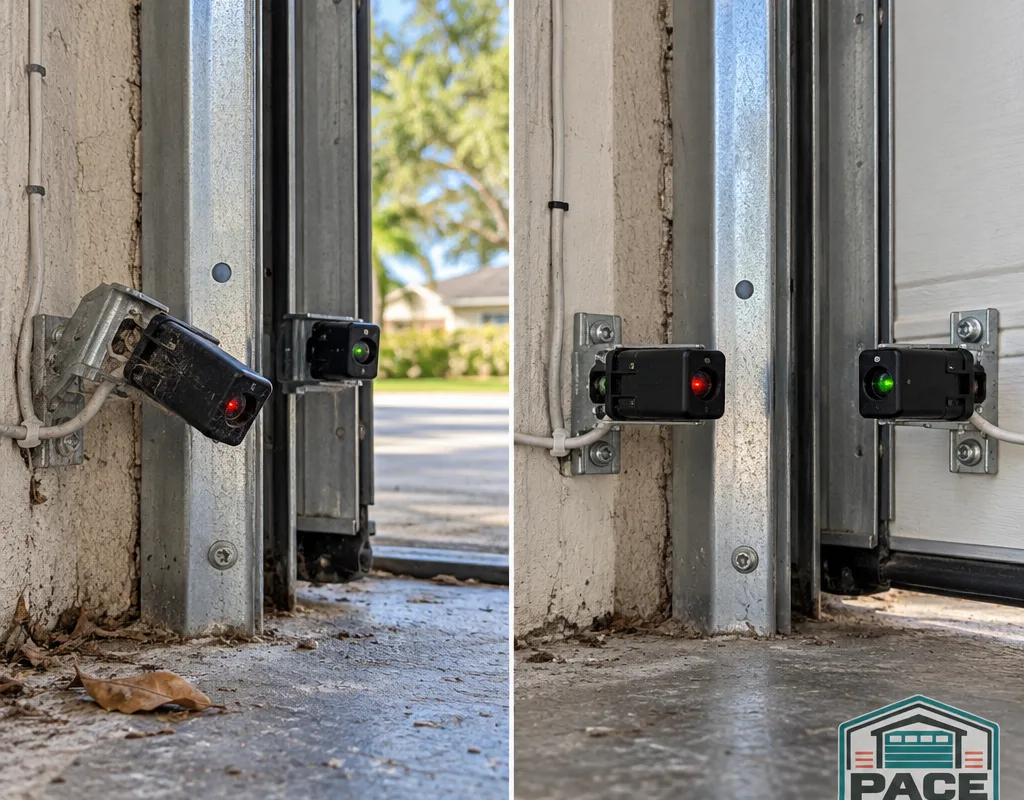
Safety sensor placement: Photo eyes are mounted facing each other, aligned, and tested so the door reverses when the beam is interrupted.
Final safety and function check: We test open, close, stop, reverse, manual release, and basic obstruction response. If the door itself is heavy, jerky, or out of balance, we will recommend correcting that before relying on the new opener daily.
Installation choices
A common choice when you want quieter operation. Ideal when a garage shares a wall with living space or bedrooms.
A practical option for many standard residential doors. We focus on correct tensioning and hardware so the system runs smoothly.
Mounted beside the door rather than on the ceiling. Works well when you want ceiling space back, but it requires the right door and torsion setup.
We can pair remotes, set keypads, and confirm basic app connectivity when the opener model supports it.
When an older opener is unreliable, we can remove and replace it, then set limits and safety devices to current expectations.
Your installation visit
We start by checking how the door moves by hand, the condition of hinges and rollers, and whether the door looks balanced. This prevents installing an opener onto a door that is fighting the tracks.
We install the header bracket, rail, and motor unit with solid support. The door arm is connected so the opener pulls straight and does not rack the door.
We connect the wall control and safety sensors, pair remotes, and set up keypad access when included.
We set open and close travel, then fine-tune force so the door seats properly without stressing the system. Photo eyes are aligned and tested for reliable reversal.
You get a quick walkthrough of daily operation, manual release use, and what sounds or behaviors mean it is time to schedule service.
Repair before replacement
Repair can make sense when the unit is structurally sound and the problem is isolated to adjustments, wear items, or a straightforward electrical issue. Common examples include a door that stops short (limit settings), reverses immediately (sensor alignment or wiring), or runs but does not move the door (trolley engagement).
We will always look for the root cause before recommending replacement. A surprising number of “opener problems” are actually door problems, like worn rollers, a bent track, or a door that is out of balance and overloading the motor. Fixing the door first can restore normal operation and extend the life of the opener.
If a repair is appropriate, we focus on getting the opener working safely again: consistent travel, reliable reversing behavior, and predictable control response. If the unit is obsolete, has repeated failures, or cannot be set up to operate safely, we will tell you plainly and walk through replacement options.
Installation details
Common questions
Opener installation time depends on whether it is a simple replacement or a first-time setup that needs new mounting, wiring, or door reinforcement. Time also increases when travel issues reveal the door needs adjustments before the opener can be set safely.
Yes, as long as the door is in good condition and moves smoothly by hand. If the door binds, is out of balance, or has worn hardware, those issues should be corrected first so the new opener is not overloaded and the safety reverse behavior is reliable.
That behavior is usually caused by a safety sensor problem or force/limit settings that make the opener think it hit an obstruction. We often see this after minor bumps to the photo eyes or after DIY adjustments; the fix is typically sensor alignment, cleaning, wiring checks, and then verifying force and travel settings.
We replace or reuse components based on compatibility and condition. Some opener models require their matching wall control or sensors, and older parts may not integrate correctly, so we confirm what should be installed to keep operation consistent and safe.
A wall-mount opener can be a good fit when you want ceiling space back, but it depends on the door's torsion spring setup, drum condition, and side room near the torsion tube. The quickest way to confirm is a site check of the spring system and clearances.
First, stop running it to avoid stripping gears or bending the door arm. The issue is often a disengaged trolley, a broken spring (the door will feel very heavy by hand), or a mechanical bind in the door hardware; a service visit can confirm which one applies and whether repair or replacement makes more sense.
Tell us what the opener is doing now and whether this is a replacement or a first-time installation. You'll get a clear scope, safety checks, and settings tuned for daily use.